Friday, July 18, 2014

Assignment #10 How can music reflect the human vibe?

How does music reflect the human vibe? 

Watch the video and write a response to the question below. 

http://nyti.ms/RTNNch

If all Presidential debates were like this would you watch them? Why or why not?  Write a response.

Assignment #9: Kanye West - Diamonds From Sierra Leone

History of the Conflict

Charles Taylor
The human cost of Liberia’s two civil wars and the related conflict in Sierra Leone was staggering. 200,000 people were killed, 2 million displaced, and half of Sierra Leone’s female population subjected to sexual violence including rape, torture and sexual slavery. Natural resources did not trigger these conflicts, but they were crucial to funding them.
As rebel leader and later president, warlord Charles Taylor monopolised the diamond industry in Liberia and then eastern Sierra Leone, where he traded diamonds for guns with the Revolutionary United Front (RUF). The signature tactic of the RUF was to mark victims by hacking off their limbs. At its peak, this rebel group was bringing in as much as $125m annually from the illicit diamond trade.  
Global Witness first exposed how “blood diamonds” were driving these conflicts, and a UN investigation in 2000 confirmed that stones were being systematically smuggled out from eastern Sierra Leone through Liberia, and from there onto the international market. The UN finally imposed sanctions on Liberian diamonds in March 2001 – at which point the Taylor regime turned its focus onto the timber trade. Taylor established a shadow state that bypassed the normal state institutions and diverted timber revenues to private bank accounts rather than the national treasury.
Liberia's timber revenues were at least US$106 million in 2000, but government accounts show only US$7 million of this money appearing in state coffers. The trade was a key cog in Taylor’s war machine, with logging company militias acting as private armies and companies themselves trafficking arms.
In March 2003, the Special Court for Sierra Leone formally indicted Charles Taylor for war crimes, including murder, rape and pillage.  UN timber sanctions were finally imposed in July 2003, more than two years after they were first discussed by the Security Council. The following month, with his funding cut off and various rebel groups advancing on Monrovia, Taylor went into exile in Calabar, Nigeria. He remained involved in Liberian politics, in contravention the terms of his exile deal, until his escape and subsequent arrest on 29 March 2006.
Charles Taylor’s war crimes trial at the Special Court for Sierra Leone continues in The Hague today.

What are Blood Diamonds?
Blood Diamonds, also known as Conflict Diamonds, are used in the illegal trading of diamonds to finance conflict, civil wars and human rights abuses in Africa. Profits from this illegal diamond trade in diamonds have been used by warlords and rebels in Africa to buy arms. The countries involved in the illicit trading of blood diamonds include Angola, the Democratic Republic of Congo, Liberia, and Sierra Leone. 
The History of African Blood Diamonds - Sierra Leone
Sierra Leone is a country in West Africa which is bordered by Guinea on the north and Liberia on the south, with the Atlantic Ocean on the west of this African country. Between 1991 and 2000, Sierra Leone endured a devastating civil war. The major source of hard currency in Sierra Leone consists of the diamond mining. The Revolutionary United Front (RUF) rebels in Sierra Leone attempted to overthrow the government, and an illicit diamond trade was used to fund the war effort. These gems were referred to as African Blood Diamonds or Conflict Diamonds. The Civil War in Sierra Leone claimed over 75,000 lives and caused 500,000 to become refugees, and displaced half of the population of Sierra Leone (4.5 million people) to become displaced. From 1989 to 2003 Liberia, an adjoining country of Sierra Leone, was also engaged in a civil war and became the main route for exporting conflict or blood diamonds from Sierra Leone.

History - The United Nations (UN) highlights the issue of African Blood Diamonds
The United Nations identified the issue of African Blood Diamonds being used as a source of funding for the civil wars in Africa in 1998.


After reading the articles and watching the Kanye West video respond to the following questions:

1.  Do you think the lyrics to Kanye West's song related to the issue of "Blood Diamonds" in Africa?
2.  What conflicts does Kanye West discuss in the song, "Diamonds from Sierra Leone"?

Wednesday, July 16, 2014

Assignment #8: Protest Songs

Click on the link and watch the video.

http://nyti.ms/1mKOkZE

Respond to following questions:
Do you think protest songs are an effective way of getting important messages across to the public?
Do you think that protest songs will make a difference and change Gov. Cuomo's mind about continuing Hydraulic fracturing in New York State?

Assignment #7: The Rise and Fall of Heroin Chic

The Rise and Fall of Heroin Chic 

heroin chic. —n. the perceived glamorization of heroin and the characteristics associated with heroin addicts, such as gauntness and hollow eyes 

Heroin Chic From The Mid 90′s

October 7th, 2013 → 11:18 pm @ 
4

heroin chic
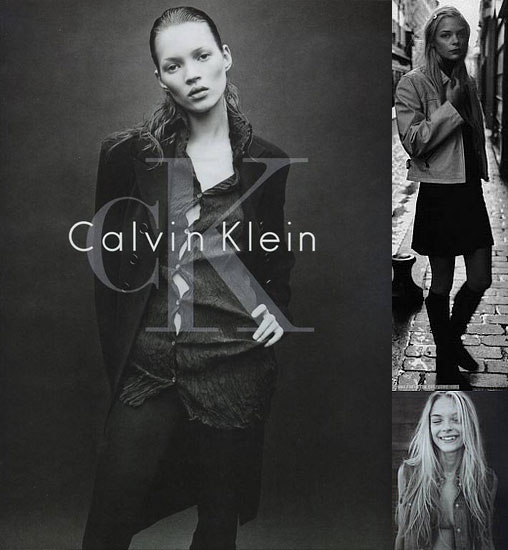
It’s the mid 90′s. Models with wild hair, pale skin, gaunt appearance and apathetic look confidently ruled the runaways. No one ever smiled. TV is overfilled with Mark Renton wearing tight jeans and trashy looking all-stars with the dirty evidence from the last night.The hero of our time which we worshiped, regardless of his desperate life -smelly mix of sex, drugs, rock music, football and bloody sputum. Pop culture has suddenly fallen in love with destruction and imperfections that created complete new fetish. All of a sudden everything ever considered profoundly immoral and wrong began to be celebrated but without a hint of glamor . Because glamor was so passe and so fake and so boring !!!  The nineties were the years when the fashion industry snatched a page with flawlessly unattainable beautiful models and turned to nihilistic vision of beauty proclaiming the trend know as Heroin Chic, having crowned Kate Moss as its undisputed queen. It was about glorification of addiction, rebellion and despair of a generation , or was there a tremendous need for anti – industry glamor ??!! , I do not know.
heroin chic
Saturation or change in the society ? ! There was a sudden shift. Super models of the pre -era were the opposite of  the Heroin chic . Models like Cindy Crawford and Claudia Schiffer at the beginning of the decade have released fitness videos wherein they train their healthy, never too skinny bodies, which made a mockery of the mortal women who were watching their videos while sweating in the living rooms with weights in  their hands. They were super models , elusive , alien beautiful , everything about them screamed: Perfect , perfect, just perfect!!  Each hair was in place and flawlessly gleamed under the lights, the makeup was stable and smeared red lipstick would represent a world problem. In the early nineties no mascara was smeared in public. And then from nowhere  she entered  into the fashion scene, Kate Moss, who casually lights a cigarette after cigarette in the backstage before the fashion show.
A new generation steps into underground scene, mostly self-taught photographers who were sick of idealized models that look like people from another planet. Fashion wished something different and embraced the trend with a completely different end of the spectrum. A large number of editorials in that time flirts with the vision of dissolution , self-destruction and addiction and enjoying it in a wonderful and somewhat distorted way.
Suddenly it became boring to photograph models under controlled conditions where a single lock can’t stand wrong. Much more interesting is to depict the reality of the streets even in the realm of unspoiled high fashion. Androgynous fashion models with wild hair, pale complexion, prominent collar bones and dark circles around the eyes are acceptable aesthetics of  the ‘cynical trend ‘ of the mid-nineties. Torn nylons no longer represented a problem, just as smeared lipstick. Editorial was moving from clean and decorated to the streets with broken glass on a cold gray pavement. The models are placed in the role of modern , tragic heroine lying on a dirty floors while appearing as if they had just woken up to be photographed in a semi sleep after a very stormy night wearing expensive designer dress and one missing heel that costed 500 $.
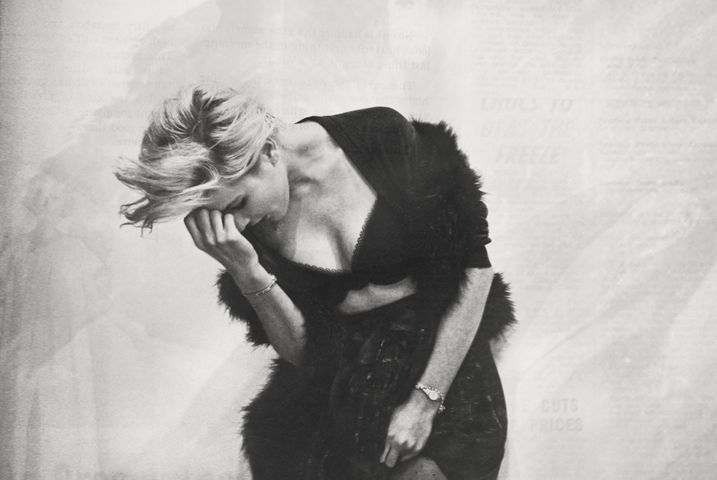
The girls from the pages of fashion magazines are no longer glamorous representation of unobtainable perfection. Photos are raw, raw and ragged, mostly black and white to emphasize the reality, brutality and emotion. It was a movement against the glamour and the whole philosophy of Heroin chic was based on the idea that authentic beauty stems from the fact that something that is considered valuable is treated with nonchalance, disrespect, and even a bit abused. The idea is to show how much you don’t give a fuck !! There  lies the charm and appeal of deglamorization of  fashion and glorification of despair, neglect, imperfections, rebellion while flirting with illegal, immoral and dangerous.
heroin chic
In the mid nineties the trend was not giving a fuck for a single thing, and then it is probably more than ever in the history of art when personal sinking and despair was celebrated. The Heroin chic has became a symbol of resistance to boring life by the rules. As Renton ironically said: “Choose Life. Choose a job. Choose a career … ‘ throwing all the values ​​and rules into  garbage and choosing something else. The tragic, self-destructive characters who didn’t care for themselves or others became the heroes in a strange amalgam of disgust and fascination.
world
After the death of a young photographer Davide Sorrentia who died of a heroin overdose and his statement shortly before, explaining that the concept of Heroin chic is not just a question of aesthetics but of the new reality, fashion world and political scene stirred. Media emphasized how popular culture and fashion wandered into the sick street and how undoubtedly have spoiled the younger generations. Did the social reality change ?! I don’t think so…. Today it’s just covered up and photoshoped  below polished editorials, promoting  girls with perfectly shiny hair and flawless make-up, which again seem morally acceptable idols for the new young generations.

Kurt Donald Cobain (February 20, 1967 – c. April 5, 1994) was an American musician and artist, who was best known as the lead singer, guitarist, and primary songwriter of the grunge band Nirvana. Cobain formed Nirvana with Krist Novoselic in Aberdeen, Washington, in 1985 and established it as part of the Seattle music scene, having its debut album Bleach released on the independent record label Sub Pop in 1989.
After signing with major label DGC Records, the band found breakthrough success with "Smells Like Teen Spirit" from its second album Nevermind (1991). Following the success of Nevermind, Nirvana was labeled "the flagship band" of Generation X, and Cobain hailed as "the spokesman of a generation".[1] Cobain, however, was often uncomfortable and frustrated, believing his message and artistic vision to have been misinterpreted by the public, with his personal issues often subject to media attention. He challenged Nirvana's audience with its final studio album In Utero (1993). It did not match the sales figures of Nevermind but was still a critical and commercial success.
During the last years of his life, Cobain struggled with heroin addiction, illness and depression. He also had difficulty coping with his fame and public image, and the professional and lifelong personal pressures surrounding himself and his wife, musician Courtney Love. On April 8, 1994, Cobain was found dead at his home in Seattle, the victim of what was officially ruled a suicide by a self-inflicted shotgun wound to the head. The circumstances of his death at age 27 have become a topic of public fascination and debate. Since their debut, Nirvana, with Cobain as a songwriter, has sold over 25 million albums in the US, and over 75 million worldwide. Cobain was inducted - along with fellow Nirvana members Krist Novoselic and Dave Grohl - into the Rock and Roll Hall of Fame in 2014, the first year in which they were eligible.

Heroin Chic? Alternative Rock Bands Glamorize The Use Of Drugs

August 5, 1996|By Myriam Marquez of The Sentinel Staff
A quarter century ago, heroin, alcohol and a pharmacy shelf full of other drugs led to the deaths of rockers Jimi Hendrix, Janis Joplin and Jim Morrison. Few of my generation were stunned by the news of those deaths.
So why are we so stunned that today another generation of young people would find smack so alluring that it would be worth dying for the high?

''Long out of sight, heroin is back,'' a Sentinel headline warned us recently. It detailed how drug runners are using Puerto Rico to ship heroin and other drugs to Florida and other ports and right into the noses and veins of young people in Orlando.
The Puerto Rico connection didn't surprise me. Ever since the 1980s' crackdown on cocaine cowboys by federal drug-enforcement agencies in South Florida, there has been mounting evidence that South American drug producers have moved their operations to ports in the Caribbean - particularly Puerto Rico and Cuba - to smuggle drugs to the states.
So what if Puerto Rico is the latest route for the drug scourge. That doesn't explain why there's a demand right here in little Orlando.
Why are young people snorting or shooting heroin in 1996?
Did parents who lived through the 1960s drug haze forget to talk frankly about drugs to their kids?
Has a decade's worth of anti-drug education in the public schools been an abysmal failure?
Those are two potential explanations. I believe that there's a third, more potent cultural force driving kids to smack: alternative rock bands that have commercialized gloom and doom and glamorized the use of drugs as an escape to their manufactured mayhem.
Black gangsta artists rapping about beating bitches and killing cops caught the public's attention. But what about the cultural effects of alternative rock bands, such as Nirvana, Smashing Pumpkins, Skinny Puppy, Hole and Stone Temple Pilots - bands that attract white, suburban teenagers with lyrics that peddle alienation and confusion?
Heroin chic, they call it - from the pale, skinny fashion models with dark circles painted under their eyes to actor Robert Downey Jr.'s latest arrest on drug-possession charges - it's all part of the heroin chic scene.
The death of Nirvana's Kurt Cobain two years ago was supposed to be a wake-up call to the ''heroin chic'' set. Cobain, who had been struggling with a heroin addiction, blew his brains out with a shotgun.
Last month the Smashing Pumpkins' backup keyboard player, Jonathan Melvoin, died of a heroin overdose. A week later the band dropped drummer Jimmy Chamberlain, who was arrested on heroin-possession charges related to Melvoin's death.
Melvoin joined rockers Kristen Pfaff of Hole and Dwayne Goettel of Skinny Puppy in the Heroin Hall of Shame.
Then there are the ''survivors.'' Rockers charged with heroin possession in the past 1 1/2 years include Scott Weiland of Stone Temple Pilots, Kelley Deal of the Breeders and Al Jourgensen of Ministry.
And if it's not heroin that gets you, it's cocaine. Singer Shannon Hoon of Blind Melon, after being treated for heroin addiction, was found dead of a cocaine overdose in the band's tour bus in October.

After reading the articles and watching the video clip.  Respond to the prompt and question:
Discuss impact that music can have on a generation.
What impact do you think 'heroin chic" on the generation during that time?

Wednesday, July 9, 2014

Assignment #3: OutKast - Rosa Parks


Rosa Parks is a black civil rights activist from Alabama famous for refusing to give up her seat on a bus. In 1955, while riding the bus home from work, the driver ordered her to move to the back of the bus so a white man could have her seat. She refused and was arrested. This led to outrage in the black community, who boycotted public transportation in the city of Montgomery. It was a turning point in the US civil rights movement, as after a year of boycotts, segregation on busses was ruled unconstitutional. During the boycotts, Martin Luther King Jr. emerged as a leader in the black community, and was praised for his tactics of peaceful civil disobedience.
The song is about the entertainment industry. Parks is not actually mentioned in the lyrics and has nothing to do with the song, but she is referred to in the chorus of "Move to the back of the bus."

Parks sued Outkast over this, claiming it exploited her image. The case was settled in 2005, with Outkast and their record company agreeing "To enlighten today's youth about the significant role Rosa Parks played in making America a better place for all races." Parks was 92 when the case was settled.

Rosa Parks Sued OutKast


Yep, that is right. Civil rights icon, Rosa Parks, sued music group OutKast in 2003 for their song “Rosa Parks.”
The US Supreme Court allowed a court ruling that reinstated Ms Parks’ claims, made in 1999, against OutKast and three Bertelsmann AG companies. Ms Parks said use of her name without permission was false advertising and infringed on her right to publicity. It defamed her character and interfered with a business relationship, she said. Ms Parks is also taking action against LaFace Records, the record producer, Arista Records and BMG Entertainment, which distributed the music.
Ms Parks said the album’s ”profanity, racial slurs and derogatory language directed at women” handicapped her future business dealings, caused emotional distress and tainted her legacy.
A federal judge dismissed her 1999 lawsuit, saying constitutional free speech rights under the First Amendment covered the use of Ms Parks’ name.
Although an appeals court upheld the dismissal of the claims of defamation and interference with a business relationship, it reinstated the rest of the case. Lawyers for OutKast and the other defendants then appealed to the Supreme Court, saying the appeals court unconstitutionally allowed public figures to use trademark and right-of-publicity laws to censor speech. But the Supreme Court rejected the appeal without comment.
Ms Parks’ 1955 arrest for failing to give up her seat triggered a 381-day bus boycott that first brought the Rev Martin Luther King Jr to national attention.

Rosa Parks settles suit over OutKast CD


Friday, April 15, 2005 Posted: 5:13 AM EDT (0913 GMT)

(CNN) -- Rosa Parks, who helped trigger the civil rights movement in the 1950s, and rap duo OutKast have settled a lawsuit over the use of her name on a CD released in 1998, her guardian Dennis Archer said Thursday.
Under the settlement, OutKast and co-defendants SONY BMG Music Entertainment, Arista Records LLC and LaFace Records will help develop educational programs to "enlighten today's youth about the significant role Rosa Parks played in making America a better place for all races," according to a written statement.
The groups will work with the Rosa and Raymond Parks Institute to promote Parks' legacy.
The settlement in the case that has dragged on for years implies no fault by the defendants, said Archer, former Detroit mayor and Michigan Supreme Court justice.
The 1999 lawsuit alleged defamation and trademark infringement because the Grammy-winning group OutKast used Parks' name without her permission in the song title "Rosa Parks." The chorus is: "Ah-ha, hush that fuss. Everybody move to the back of the bus."
Parks, now 92, made history in December 1955 when she was arrested for refusing to give up her seat to a white man on a Montgomery, Alabama, city bus. Her arrest triggered a 381-day boycott of the bus system by blacks and led to court rulings desegregating public transportation nationwide.
OutKast contended the song is neither false advertising nor a violation of Parks' publicity rights and is protected by the First Amendment.
According to court records, Parks has suffered from dementia since 2002.


After watching the video clip and reading the articles respond to the question below: 

1.  Do you think Rosa Parks was a hero or just a lawbreaker?
2.  Do you think that the OutKast, video for the song "Rosa Parks" disrespects the legacy of civil rights icon Rosa Parks.  Why or why not?

Wednesday, July 2, 2014

Assignment #6 Can music spark violence?

Click on the link below and watch the video. Respond to the question below: 
Do you think that the "loud rap music" played a role in how the teen was perceived by his killer? Write response.  


http://nyti.ms/1alThZy

Assignment # 5: Is Rap Music really Music?

Read the following article and write a response:


Is Rap Actually Music or is it a Bad Influence?


Is Rap Actually Music or is it a Bad Influence?
By renee
www.associatedcontent.com…tml?page=2
original article-August 23, 2006

The world of hip hop would have you believe that rap is a very poetic way of expressing yourself through music. This can of course be true, but does what you hear from rap music sound very poetic to you? The influence that rap currently has on our children all around the world is unfortunately a very strong one. If you have not noticed many of the major leaders in the rap community try to get involved with good causes and political campaigns in order to make it appear that rap is a good thing. But have you really taken the time to listen to some of these rap songs? I mean really focus on the words and what they mean.
Eighty percent of the rap music that is currently on the top ten lists around the world contains violence. They glorify the acts of beating up another person, or even worse shooting them. Looking like someone who just got released from prison in their eyes is a good thing. Not to mention that half of the time they are yelling their lyrics in such a loud and annoying way you may not be able to really understand what they are saying. Remember this is where the fashion statement of wearing pants off of your butt and looking sloppy came from in addition to women who are half naked. What is the end result of half naked women in a rap music video?
Obviously girls think this is the way for other boys or men to notice them and to make themselves more popular in school. Another thing that rap music also seems to glorify is that what matters most when looking for a good woman is what her body looks like. This is why there are so many teenagers who have eating disorders or other emotional problems. They just don't feel that they fit the diagram of what teenage girls should like. Rap music also glorifies drinking, and sex. Two things which happen to be a major problem among many children today.
There are some rappers however who keep their lyrics clean and try to rap about positive things. Although the numbers of rappers who do this are very few there definitely are some out there who send a good message to children. One of these is Will Smith who has outwardly spoken about how he does not see the need to include vulgar language or lyrics in his rap music. So the bottom line is that when you are trying to determine whether or not to allow your child to listen to rap music, it is not so much rap itself, but the artist which they choose to listen too.
Rap music did originally start as a poetic form of music, it has just been distorted by people who choose to use rap as a way to promote gang violence and other means of self destruction. Make sure that you take the time to listen to the music that your child listens to. And don't be so quick to rule out rap music, just make sure that you take the time to listen to the lyrics first and then make your decision. For additional information you can visit the following websites: www.uic.edu, www.yale.edu, www.rapworld.com, www.rhino.com.

Assignment #2: How can Music influence a Movement?

Music of the Civil Rights Movement

Students hear the music behind equal rights

By Henry Dunkelberger | February 18 , 2010

During the 1960s, The Freedom Singers traveled more than 50,000 miles to perform at civil rights campaigns. Their music provided inspiration to an oppressed minority seeking equal rights in their own country.

The music that inspired and drove the fight for civil rights was the focus of a workshop and musical event at the White House this month. In celebration of Black History Month, the White House held a workshop with high school students, led by Robert Santelli, the executive director of the Grammy Museum.

The February 9 afternoon event was followed by an evening of music in the White House that was later broadcast on PBS stations and radios. Called "The Music Behind the Civil Rights Movement," the event featured actor Morgan Freeman as emcee.

"The music became a part of everything," Freeman said in his opening remarks. "You couldn't tell who was a singer or who was the organizer, because the organizer sang and the singer organized."

That was certainly true for Bernice Johnson Reagon of The Freedom Singers. She talked about how many times she must have sang "This Little Light of Mine" before she understood its true meaning. That realization came to her during a protest in Albany, Georgia, in 1961. She was arrested and jailed for her participation.

"It was when they locked me up that I really understood that song," she told the 100 high school students in the workshop. "It [the song] was saying 'I'm not hiding. I have a light and I'm going to use it to bring about justice.'"

The workshop stressed the connection to the church and Gospel Music, Santilli told the Scholastic Kids Press Corps.

"It allowed students to participate in a workshop with some of the artists who created the original music performed," Santili said. The workshop included performances by the Blind Boys of Alabama, The Freedom Singers, and Smokey Robinson.

The evening performance included Bob Dylan, Smokey Robinson, Jennifer Hudson, Yolanda Adams, Joan Baez, the Blind Boys of Alabama, Natalie Cole, the Freedom Singers, and John Mellencamp.

Based on the reading write a response.  Are there any movements today that are influenced by music?  If so, tell write about in your response.  

Friday, June 27, 2014

Assignment #4: Is Beyonce' a Feminist?

BEYONCE: IS SHE A FEMINIST? 

Feminist: the belief that men and women should have equal rights and opportunities.

Feminist Movement 
Social movement that seeks equal rights for women. Widespread concern for women's rights dates from the Enlightenment; one of the first important expressions of the movement was Mary Wollstonecraft's A Vindication of the Rights of Woman (1792). The 1848 Seneca Falls Convention, convened by Elizabeth Cady Stanton, Lucretia Mott, and others, called for full legal equality with men, including full educational opportunity and equal compensation; thereafter the woman suffrage movement began to gather momentum. It faced particularly stiff resistance in the United Kingdom and the United States, where women gained the right to vote in 1918 and 1920, respectively. By mid-century a second wave of feminism emerged to address the limited nature of women's participation in the workplace and prevailing notions that tended to confine women to the home. A third wave of feminism arose in the late 20th century and was notable for challenging middle-class white feminists and for broadening feminism's goals to encompass equal rights for all people regardless of race, creed, economic or educational status, physical appearance or ability, or sexual preference.

Watch the video and list to the lyrics as well as the speech in the background.  


Respond to the following questions:

1. What do you think is the message of  Beyonce's song "Flawless"?
2. What is the message of the speaker Chimamanda Ngozi Adichie in the background?
3. How has Beyonce's message changed during the last few years?
4. Do you think that Beyonce is a feminist? Why or why not?

Assignment #1: FREIRE ESY 2014 WELCOME

Welcome to Summer School Freire Students!

Please post your name (first and last name) on this page. This will serve as completion of the first homework assignment.  In order for you to receive part of your summer school credit you are responsible for reading and posting a response to the blog every night.

NO EXCUSES will be accepted for not going on the blog and posting.  You can do it on your smart phones, on the computer at home, or at the library etc.  Be proactive do not wait till the last minute.