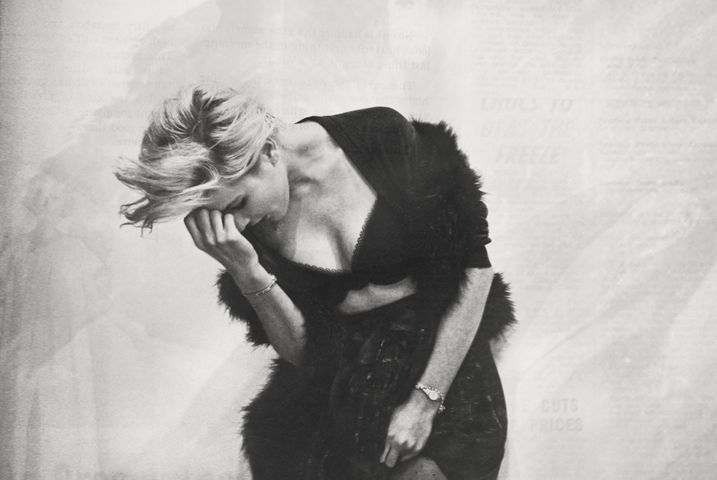
The Rise and Fall of Heroin Chic
heroin chic. —n. the perceived glamorization of heroin and the characteristics associated with heroin addicts, such as gauntness and hollow eyes

It’s the mid 90′s. Models with wild hair, pale skin, gaunt appearance and apathetic look confidently ruled the runaways. No one ever smiled. TV is overfilled with Mark Renton wearing tight jeans and trashy looking all-stars with the dirty evidence from the last night.The hero of our time which we worshiped, regardless of his desperate life -smelly mix of sex, drugs, rock music, football and bloody sputum. Pop culture has suddenly fallen in love with destruction and imperfections that created complete new fetish. All of a sudden everything ever considered profoundly immoral and wrong began to be celebrated but without a hint of glamor . Because glamor was so passe and so fake and so boring !!! The nineties were the years when the fashion industry snatched a page with flawlessly unattainable beautiful models and turned to nihilistic vision of beauty proclaiming the trend know as Heroin Chic, having crowned Kate Moss as its undisputed queen. It was about glorification of addiction, rebellion and despair of a generation , or was there a tremendous need for anti – industry glamor ??!! , I do not know.

Saturation or change in the society ? ! There was a sudden shift. Super models of the pre -era were the opposite of the Heroin chic . Models like Cindy Crawford and Claudia Schiffer at the beginning of the decade have released fitness videos wherein they train their healthy, never too skinny bodies, which made a mockery of the mortal women who were watching their videos while sweating in the living rooms with weights in their hands. They were super models , elusive , alien beautiful , everything about them screamed: Perfect , perfect, just perfect!! Each hair was in place and flawlessly gleamed under the lights, the makeup was stable and smeared red lipstick would represent a world problem. In the early nineties no mascara was smeared in public. And then from nowhere she entered into the fashion scene, Kate Moss, who casually lights a cigarette after cigarette in the backstage before the fashion show.
A new generation steps into underground scene, mostly self-taught photographers who were sick of idealized models that look like people from another planet. Fashion wished something different and embraced the trend with a completely different end of the spectrum. A large number of editorials in that time flirts with the vision of dissolution , self-destruction and addiction and enjoying it in a wonderful and somewhat distorted way.
Suddenly it became boring to photograph models under controlled conditions where a single lock can’t stand wrong. Much more interesting is to depict the reality of the streets even in the realm of unspoiled high fashion. Androgynous fashion models with wild hair, pale complexion, prominent collar bones and dark circles around the eyes are acceptable aesthetics of the ‘cynical trend ‘ of the mid-nineties. Torn nylons no longer represented a problem, just as smeared lipstick. Editorial was moving from clean and decorated to the streets with broken glass on a cold gray pavement. The models are placed in the role of modern , tragic heroine lying on a dirty floors while appearing as if they had just woken up to be photographed in a semi sleep after a very stormy night wearing expensive designer dress and one missing heel that costed 500 $.
The girls from the pages of fashion magazines are no longer glamorous representation of unobtainable perfection. Photos are raw, raw and ragged, mostly black and white to emphasize the reality, brutality and emotion. It was a movement against the glamour and the whole philosophy of Heroin chic was based on the idea that authentic beauty stems from the fact that something that is considered valuable is treated with nonchalance, disrespect, and even a bit abused. The idea is to show how much you don’t give a fuck !! There lies the charm and appeal of deglamorization of fashion and glorification of despair, neglect, imperfections, rebellion while flirting with illegal, immoral and dangerous.

In the mid nineties the trend was not giving a fuck for a single thing, and then it is probably more than ever in the history of art when personal sinking and despair was celebrated. The Heroin chic has became a symbol of resistance to boring life by the rules. As Renton ironically said: “Choose Life. Choose a job. Choose a career … ‘ throwing all the values and rules into garbage and choosing something else. The tragic, self-destructive characters who didn’t care for themselves or others became the heroes in a strange amalgam of disgust and fascination.
After the death of a young photographer Davide Sorrentia who died of a heroin overdose and his statement shortly before, explaining that the concept of Heroin chic is not just a question of aesthetics but of the new reality, fashion world and political scene stirred. Media emphasized how popular culture and fashion wandered into the sick street and how undoubtedly have spoiled the younger generations. Did the social reality change ?! I don’t think so…. Today it’s just covered up and photoshoped below polished editorials, promoting girls with perfectly shiny hair and flawless make-up, which again seem morally acceptable idols for the new young generations.
Kurt Donald Cobain (February 20, 1967 – c. April 5, 1994) was an American musician and artist, who was best known as the lead singer, guitarist, and primary songwriter of the
grunge band
Nirvana. Cobain formed Nirvana with
Krist Novoselic in
Aberdeen, Washington, in 1985 and established it as part of the Seattle music scene, having its debut album
Bleach released on the independent record label
Sub Pop in 1989.
After signing with major label
DGC Records, the band found breakthrough success with "
Smells Like Teen Spirit" from its second album
Nevermind (1991). Following the success of
Nevermind, Nirvana was labeled "the flagship band" of
Generation X, and Cobain hailed as "the spokesman of a generation".
[1] Cobain, however, was often uncomfortable and frustrated, believing his message and artistic vision to have been misinterpreted by the public, with his personal issues often subject to media attention. He challenged Nirvana's audience with its final studio album
In Utero (1993). It did not match the sales figures of
Nevermind but was still a critical and commercial success.
During the last years of his life, Cobain struggled with
heroin addiction, illness and depression. He also had difficulty coping with his fame and public image, and the professional and lifelong personal pressures surrounding himself and his wife, musician
Courtney Love. On April 8, 1994, Cobain was found dead at his home in
Seattle, the victim of what was officially ruled a suicide by a self-inflicted shotgun wound to the head. The circumstances of
his death at age 27 have become a topic of public fascination and debate. Since their debut, Nirvana, with Cobain as a songwriter, has sold over 25 million albums in the US, and over 75 million worldwide. Cobain was inducted - along with fellow Nirvana members
Krist Novoselic and
Dave Grohl - into the
Rock and Roll Hall of Fame in 2014, the first year in which they were eligible.
Heroin Chic? Alternative Rock Bands Glamorize The Use Of Drugs
August 5, 1996|By Myriam Marquez of The Sentinel Staff
A quarter century ago, heroin, alcohol and a pharmacy shelf full of other drugs led to the deaths of rockers Jimi Hendrix, Janis Joplin and Jim Morrison. Few of my generation were stunned by the news of those deaths.
So why are we so stunned that today another generation of young people would find smack so alluring that it would be worth dying for the high?

''Long out of sight, heroin is back,'' a Sentinel headline warned us recently. It detailed how drug runners are using Puerto Rico to ship heroin and other drugs to Florida and other ports and right into the noses and veins of young people in Orlando.
The Puerto Rico connection didn't surprise me. Ever since the 1980s' crackdown on cocaine cowboys by federal drug-enforcement agencies in South Florida, there has been mounting evidence that South American drug producers have moved their operations to ports in the Caribbean - particularly Puerto Rico and Cuba - to smuggle drugs to the states.
So what if Puerto Rico is the latest route for the drug scourge. That doesn't explain why there's a demand right here in little Orlando.
Why are young people snorting or shooting heroin in 1996?
Did parents who lived through the 1960s drug haze forget to talk frankly about drugs to their kids?
Has a decade's worth of anti-drug education in the public schools been an abysmal failure?
Those are two potential explanations. I believe that there's a third, more potent cultural force driving kids to smack: alternative rock bands that have commercialized gloom and doom and glamorized the use of drugs as an escape to their manufactured mayhem.
Black gangsta artists rapping about beating bitches and killing cops caught the public's attention. But what about the cultural effects of alternative rock bands, such as Nirvana, Smashing Pumpkins, Skinny Puppy, Hole and Stone Temple Pilots - bands that attract white, suburban teenagers with lyrics that peddle alienation and confusion?
Heroin chic, they call it - from the pale, skinny fashion models with dark circles painted under their eyes to actor Robert Downey Jr.'s latest arrest on drug-possession charges - it's all part of the heroin chic scene.
The death of Nirvana's Kurt Cobain two years ago was supposed to be a wake-up call to the ''heroin chic'' set. Cobain, who had been struggling with a heroin addiction, blew his brains out with a shotgun.
Last month the Smashing Pumpkins' backup keyboard player, Jonathan Melvoin, died of a heroin overdose. A week later the band dropped drummer Jimmy Chamberlain, who was arrested on heroin-possession charges related to Melvoin's death.
Melvoin joined rockers Kristen Pfaff of Hole and Dwayne Goettel of Skinny Puppy in the Heroin Hall of Shame.
Then there are the ''survivors.'' Rockers charged with heroin possession in the past 1 1/2 years include Scott Weiland of Stone Temple Pilots, Kelley Deal of the Breeders and Al Jourgensen of Ministry.
And if it's not heroin that gets you, it's cocaine. Singer Shannon Hoon of Blind Melon, after being treated for heroin addiction, was found dead of a cocaine overdose in the band's tour bus in October.
After reading the articles and watching the video clip. Respond to the prompt and question:
Discuss impact that music can have on a generation.
What impact do you think 'heroin chic" on the generation during that time?